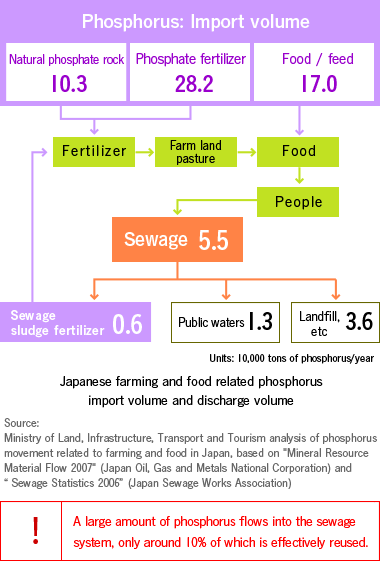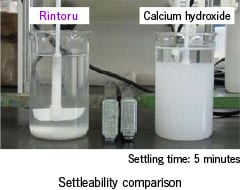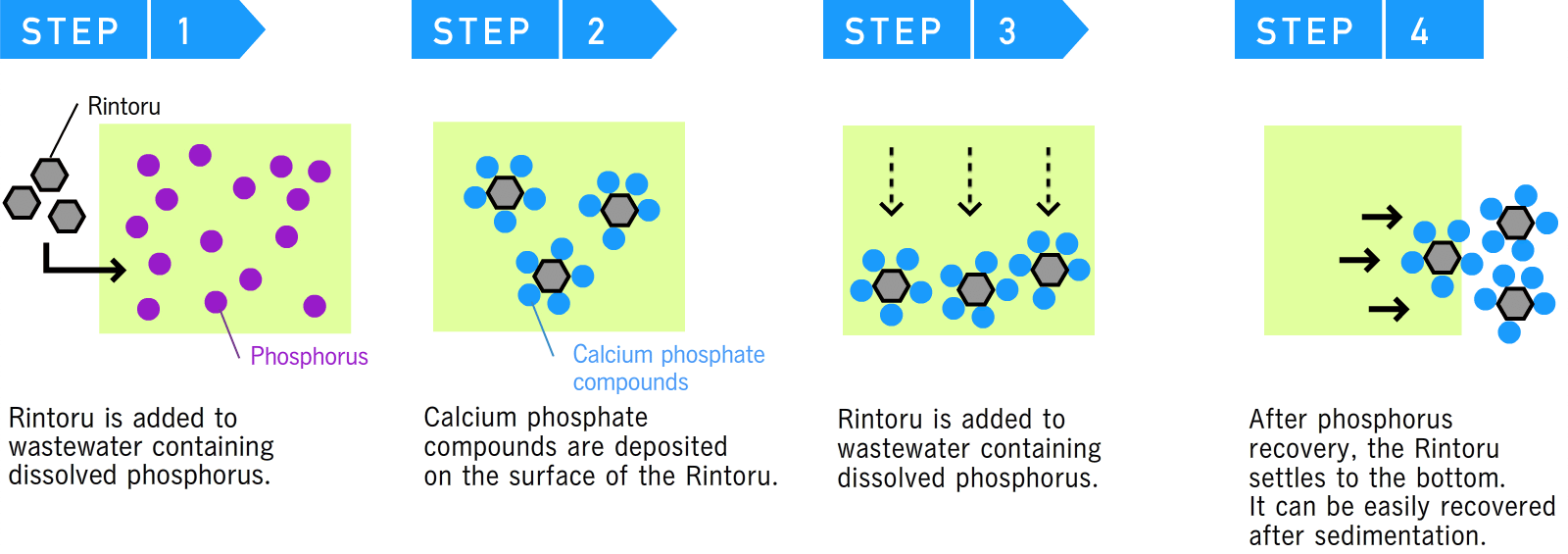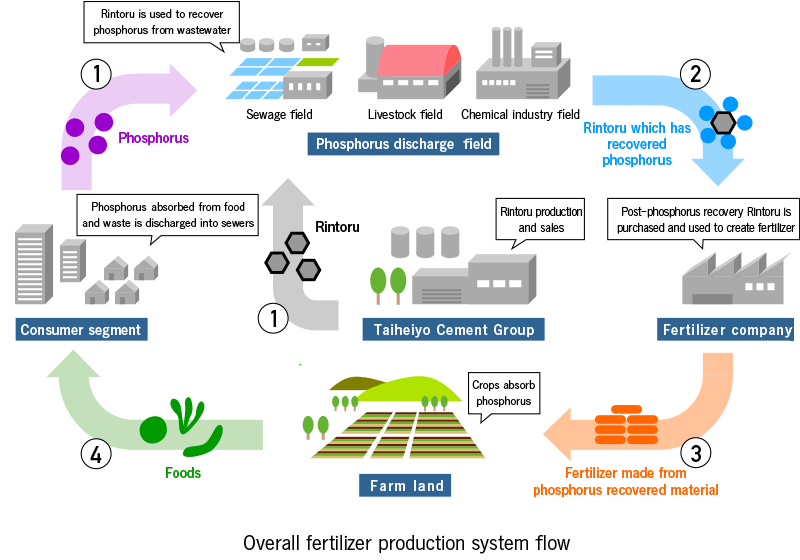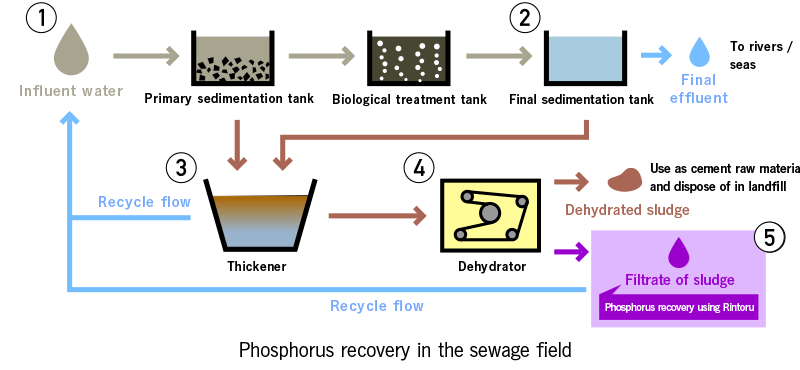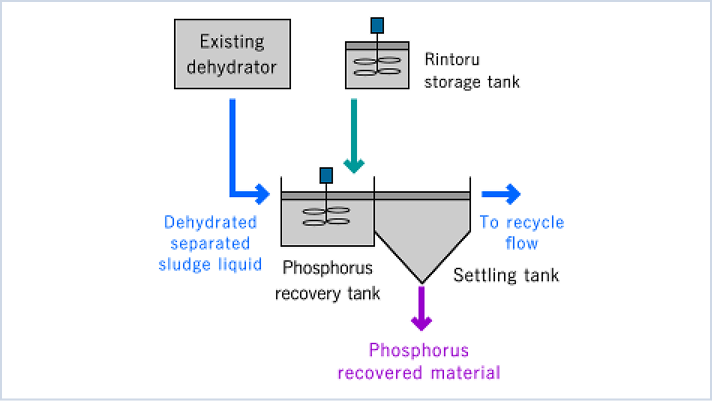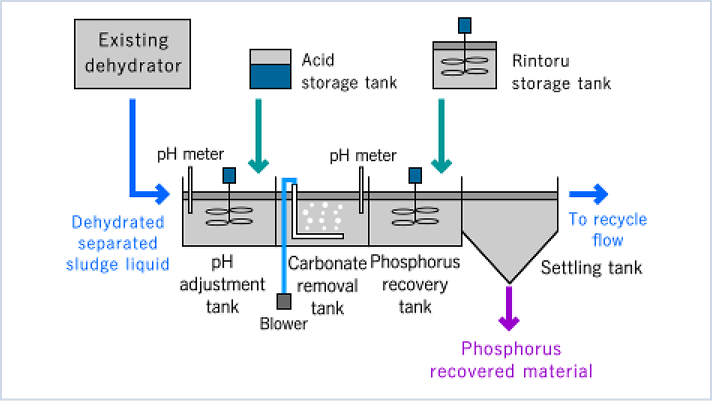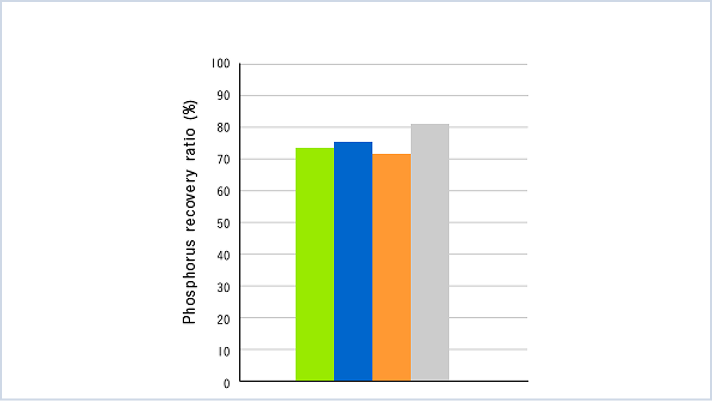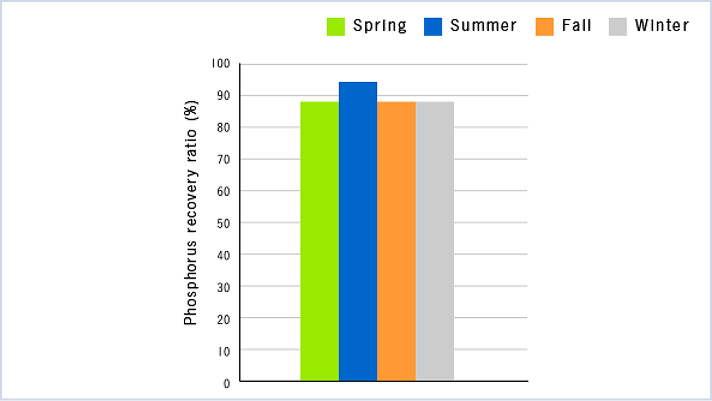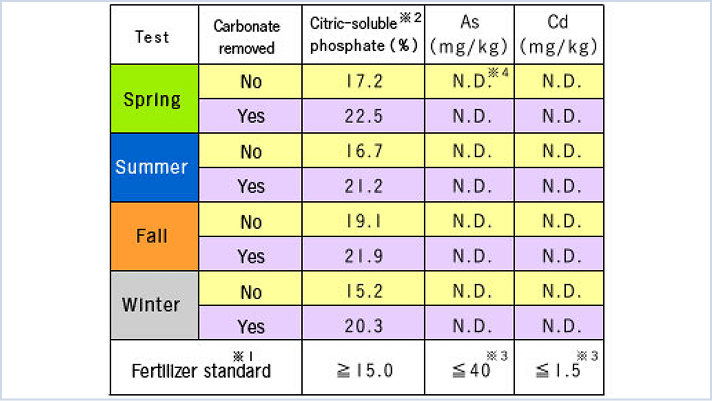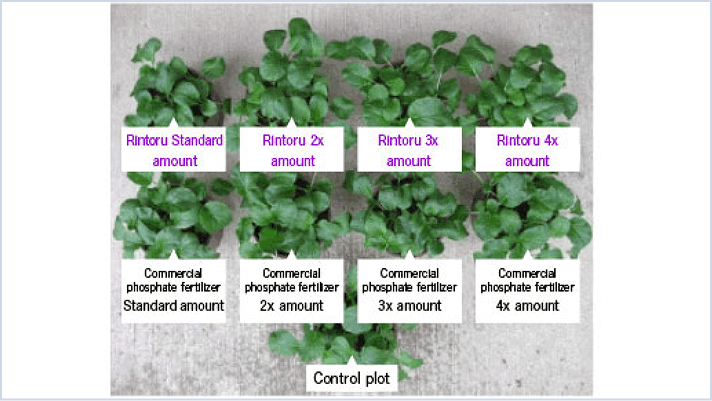
Phosphorusisanessentialelementforalllivingthings.Itisoneofthemaincomponentsofthebonesthatmakeupskeletalsystems,andtheDNAwhichconveysgeneticinformation.Phosphorusisoneofthethreemainnutrientsofplants(nitrogen,phosphoricacid,andpotassium).Withoutphosphorusitwouldbeimpossibletogrowfoodandsustainlife.However,inrecentyearsthegrowthoftheworldpopulationandtheincreaseincropproductiondrivenbythepromotionofbiofuelshasresultedinrisingphosphorusconsumption.Thesupplyofhighqualityphosphaterockispredictedtobedepletedinthenearfuture.Japandoesnothavereservesofphosphaterock,andreliesonimportsforalmostallofitsphosphorusresourceneeds,soconcernsaboutsecuringastablesupplyofphosphorusaregrowingyearbyyear.Theamountofphosphorusflushedintosewersisequivalenttobetween40%and50%ofthetotalphosphaterockimportvolume,yetonlyaround10%ofthatphosphorusisrecoveredandreused.TaiheiyoCement,togetherwithOnodaChemicalIndustryCo.,Ltd.,hasdeveloped"Rintoru*",whichcanbeusedtorecoverphosphorusfromwastewater,allowingittobeturnedintofertilizer."Rintoru"willbeafuturecontributortothesustainedusageofphosphorusresources.
However, in recent years the growth of the world population and the increase in crop production driven by the promotion of biofuels have resulted in rising phosphorus consumption. The supply of high quality phosphate rock is predicted to be depleted in the near future.
Japan does not have reserves of phosphate rock, and relies on imports for almost all of its phosphorus resource needs, so concerns about securing a stable supply of phosphorus are growing year by year. The amount of phosphorus flushed into sewers is equivalent to between 40% and 50% of the total phosphate rock import volume, yet only around 10% of that phosphorus is recovered and reused.
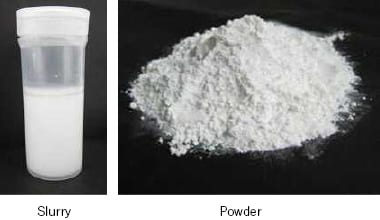
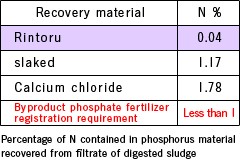
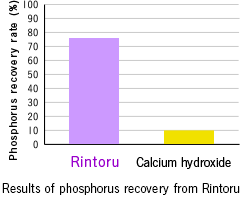
In response, Taiheiyo Cement, together with Onoda Chemical Industry Co., Ltd., developed “Rintoru®※” as a material that recovers phosphorus from wastewater and can be reused as fertilizer. “Rintoru®” is a material that can contribute to the sustainable use of phosphorus resources into the future.