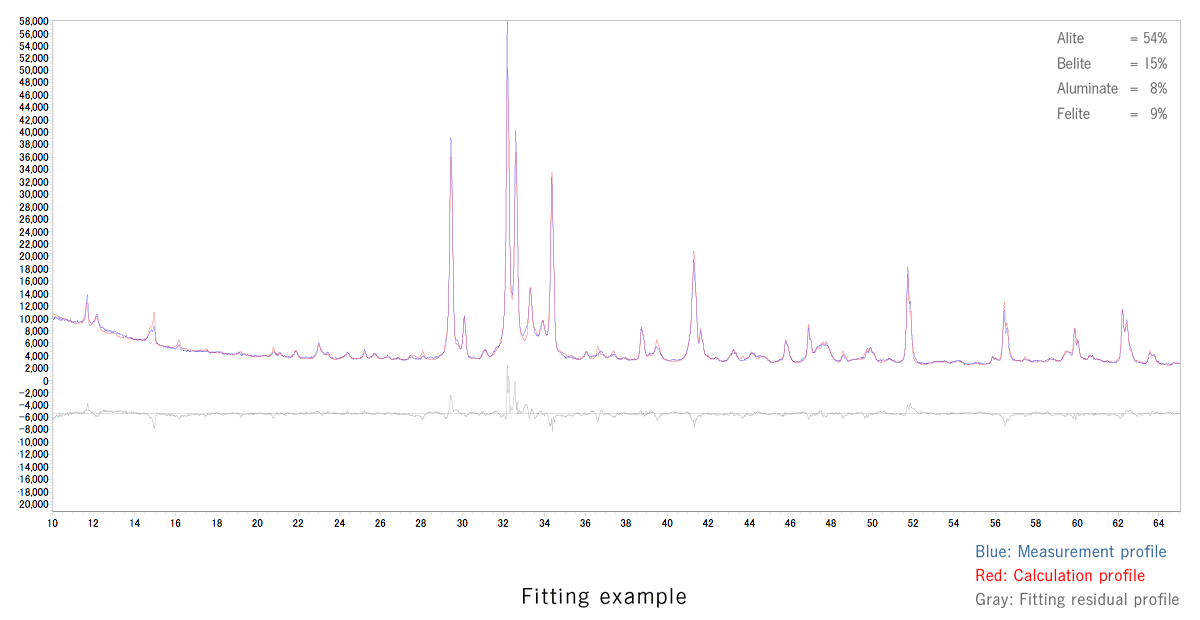
Fitting example
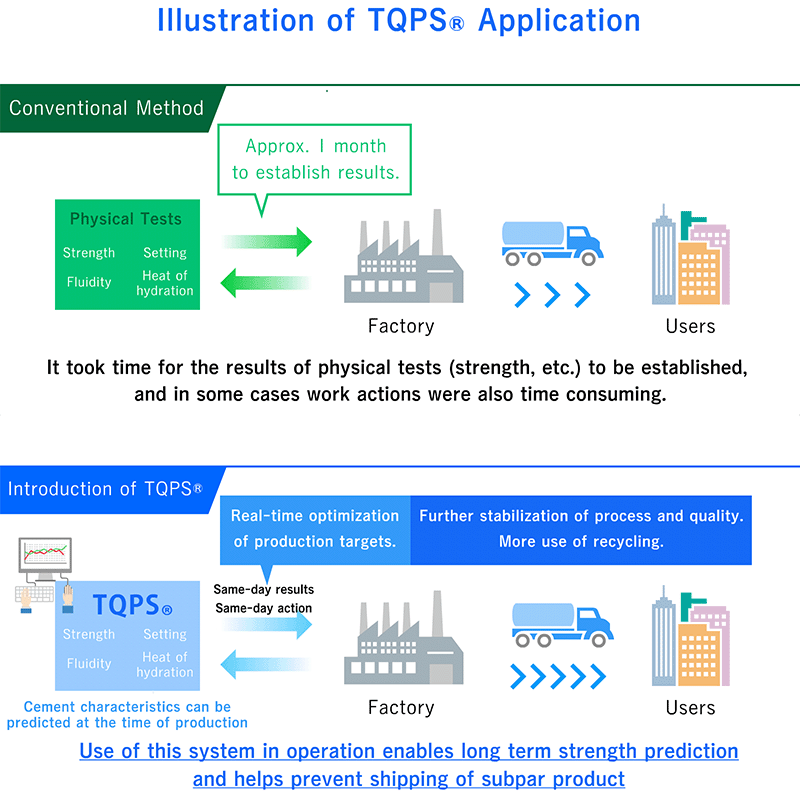
We developed the Quality Predictive System Utilizing AI Technology (TQPS®) to make cement quality even more consistent. By enabling cement characteristics to be predicted at the time of production, this system contributes to the efficient management of target values and the prevention of quality anomalies to ensure the prescribed quality.

Due to a rise in the use of various waste products as alternative fuels and raw materials for cement production in recent years, stricter quality control for cement production is required.
In addition to conventional test items, since 2005 we have progressively introduced XRD/Rietveld analysis※1 at our domestic plants. As the next step, we have built a system that makes integrated use of various test data, including Rietveld analysis, and are working to further stabilize and improve quality. As part of these efforts, we developed the “AI-Based Quality Prediction System TQPS®” and ※2 obtained a patent.
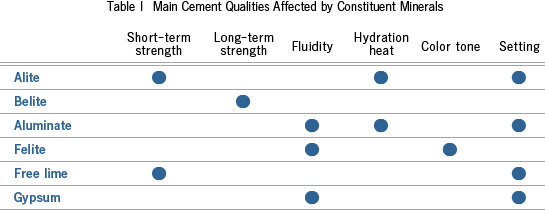
Cement is a mix of inorganic, powdered compounds which harden as a result of chemical reactions with water. As Table 1 shows, cement quality refers to properties such as fluidity, setting time, heat generation and strength. The quality of cement is strongly affected by the ratio of its constituent compounds (mineral composition). That's why the appropriate mineral composition varies by cement type. These differences make it essential to have a system for managing the mineral composition of products.
In the past, cement mineral composition has been theoretically calculated based on chemical composition, but the increase in trace elements resulting from greater use of recycled fuel and raw materials has resulted in deviations from actual mineral compositions. Conventional methods of measuring mineral composition have also taken too much time.
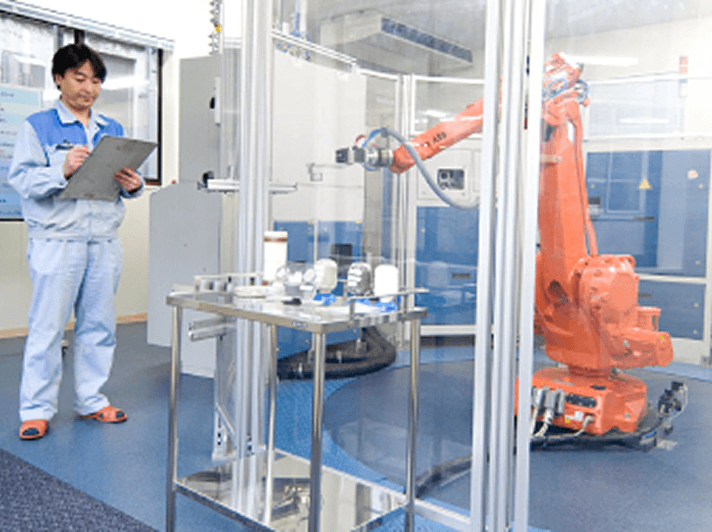
These have resulted in the need for a management system which can more accurately monitor mineral composition. In response, Taiheiyo Cement has deployed a high-precision quality management system based on XRD/Rietveld analysis, using X-ray diffractometers. This system has made it possible to perform high precision, completely automated quality management, measuring the mineral composition of cement products. It has also greatly reduced analysis times from the several hours required to measure a sample using the past approach to roughly 10 minutes.
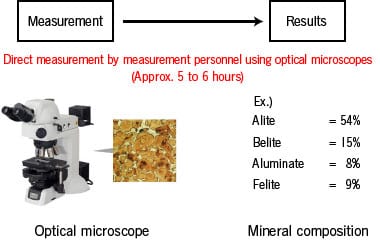
Samples are observed under a microscope, and their mineral composition is directly measured by measurement personnel.
Problems
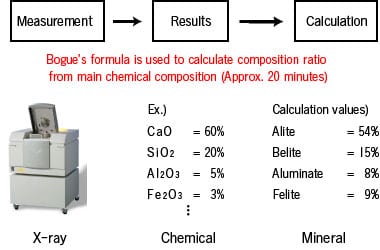
In this method, the chemical composition is measured by performing X-ray fluorescence on the sample, and then Bogue’s formula is applied to the results to derive the mineral composition.
Problems
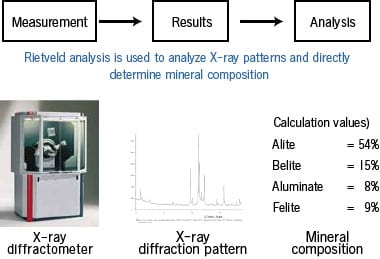
An X-ray diffractometer (XRD) is used to measure the X-ray pattern of a sample. A calculation method called Rietveld analysis is then used to analyze the results, directly calculating the mineral composition.
Advantages
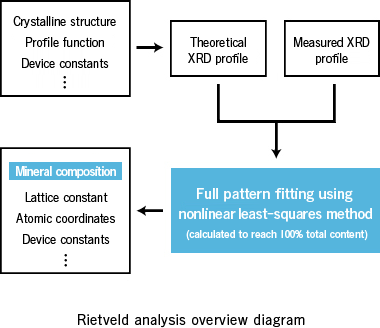
Rietveld analysis is a method created by Dutch crystallographer Hugo Rietveld in 1969 for use with neutron diffraction. The XRD/Rietveld method uses X-ray diffraction.
In XRD/Rietveld analysis, theoretical diffraction profiles for X-ray diffraction patterns are refined using the least square method to determine the crystalline structure parameters of individual minerals. This makes it possible to refine their crystalline structure.
In recent years, this method has come to be applied to samples containing multiple types of minerals, such as cement samples. When this method is used, not only the sample's crystalline structure but also the parameters indicating the ratio of various elements, referred to as the scale factor, are refined. This is making it possible to determine how much of which minerals are present in the sample. We used our own accumulated expertise to make it possible to perform quantitative analyses of cement with the optimal degree of precision.
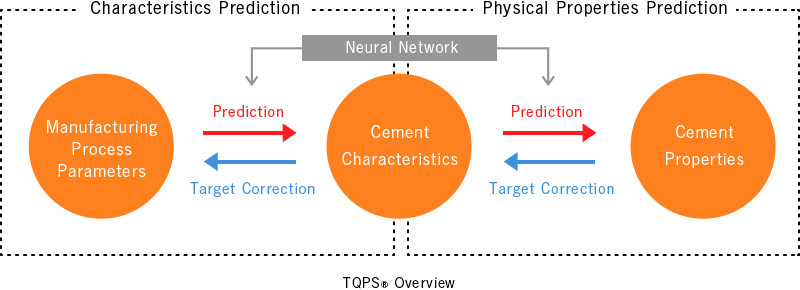
TQPS® uses an information processing method called a neural network※3 to analyze the relationships between the various cement analysis values (characters) and manufacturing operating conditions (process data) shown below and the quality characteristics (properties), and creates a model that yields the optimal solution.
This enables the efficient management of aspects such as the desired values for various characters and production operating conditions to achieve the prescribed quality. It also makes it possible to predict values for strength tests and the like that usually take some time, without waiting for material to age.

|
Variables
|
Examples
|
|
|---|---|---|
|
Manufacturing process data
|
Clinker materials
|
Chemical composition, degree of fineness, etc.
|
|
Firing conditions
|
Kiln spout temperature, average electrical energy per kiln rotation, etc.
|
|
|
Crushing conditions
|
Separator rotations, separate air flow, etc.
|
|
|
Characteristics
|
Clinker
|
Chemical composition, mineral composition, etc.
|
|
Properties
|
Cement after hydration
|
Strength, fluidity, heat of hydration, etc.
|
An overview of this system is shown below. As the illustration shows, the characteristics of cement directly describe its properties. By adding the manufacturing process conditions for producing these characteristics as a target for analysis, it should ultimately be possible to apply this to production guidelines as feedback.
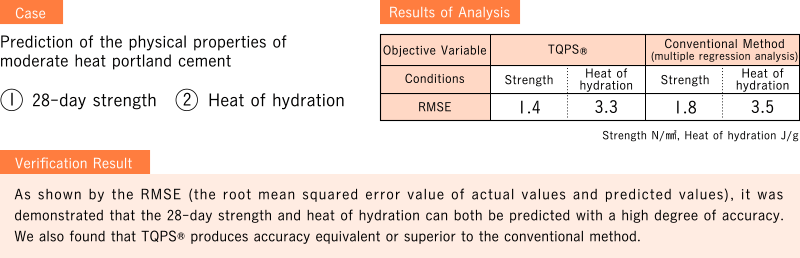
Below we give an example of a case in which TQPS® has been applied to the prediction of cement quality.
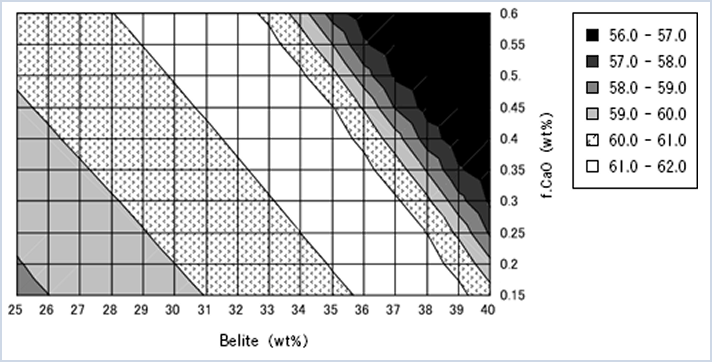
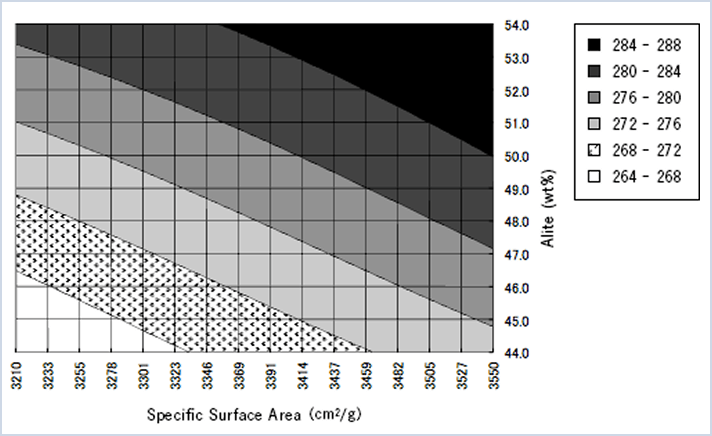
Figures 1 and 2 show the prediction examples gained through this study for each objective variable. In both figures, prediction was carried out by selecting the two factors that had the greatest impact on the objective variables.
Figure 1 confirmed that increasing the amount of belite and decreasing the amount of free lime raised the 28-day material age strength of cement. These results match our existing knowledge.
The results of Figure 2 showed that decreasing the amount of alite and decreasing the specific surface area reduced the heat of hydration for cement at 7-day material age. This is also in line with what was already known.
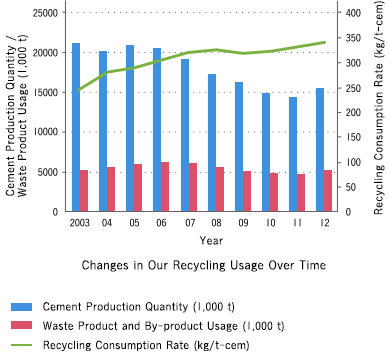
In fiscal 2011 we completed development of the beta version of TQPS®, and in fiscal 2012 we introduced it to factories on a trial basis and performed test operation at each factory. In fiscal 2013 we implemented pre-rollout training for staff at each factory, and completed introduction at all factories. Furthermore, in fiscal 2014 we created guidelines for implementing work actions based on principles from analysis results obtained through operation of the system.
From here on we believe we can optimize all characteristics and Manufacturing process parameters that relate to cement quality for each factory by accumulating work examples over the course of the actual production process. In the future we think this system can contribute to areas other than stabilizing cement quality, such as reducing the cost of cement production, increasing the use of recycled materials, and lowering environmental burdens.
We will continue striving in this way to improve customer satisfaction through our constantly innovative and ambitious initiatives, aiming to further increase quality and reduce production costs.

If you need any further information regarding the technology, please use this inquiry form to contact us.